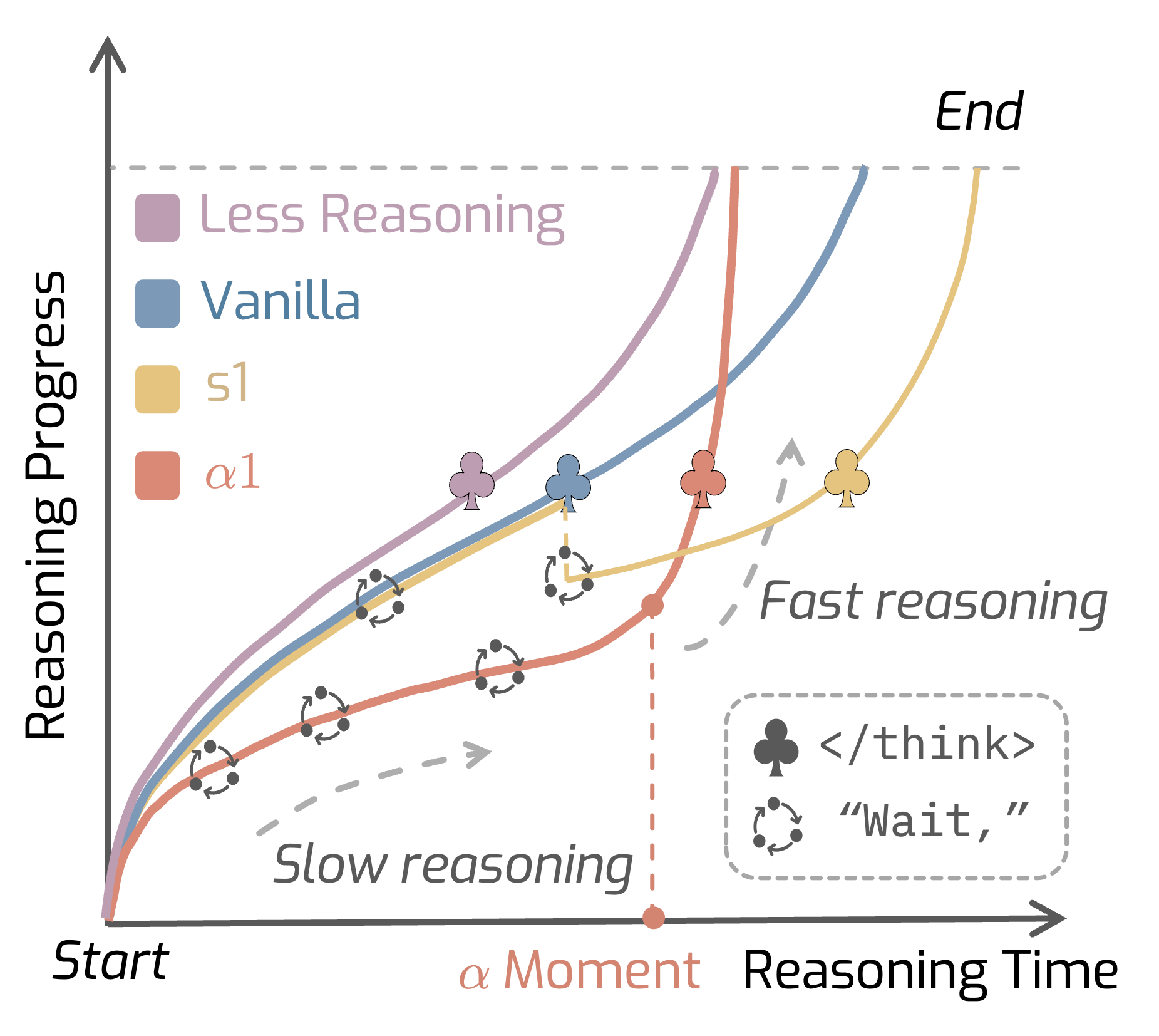
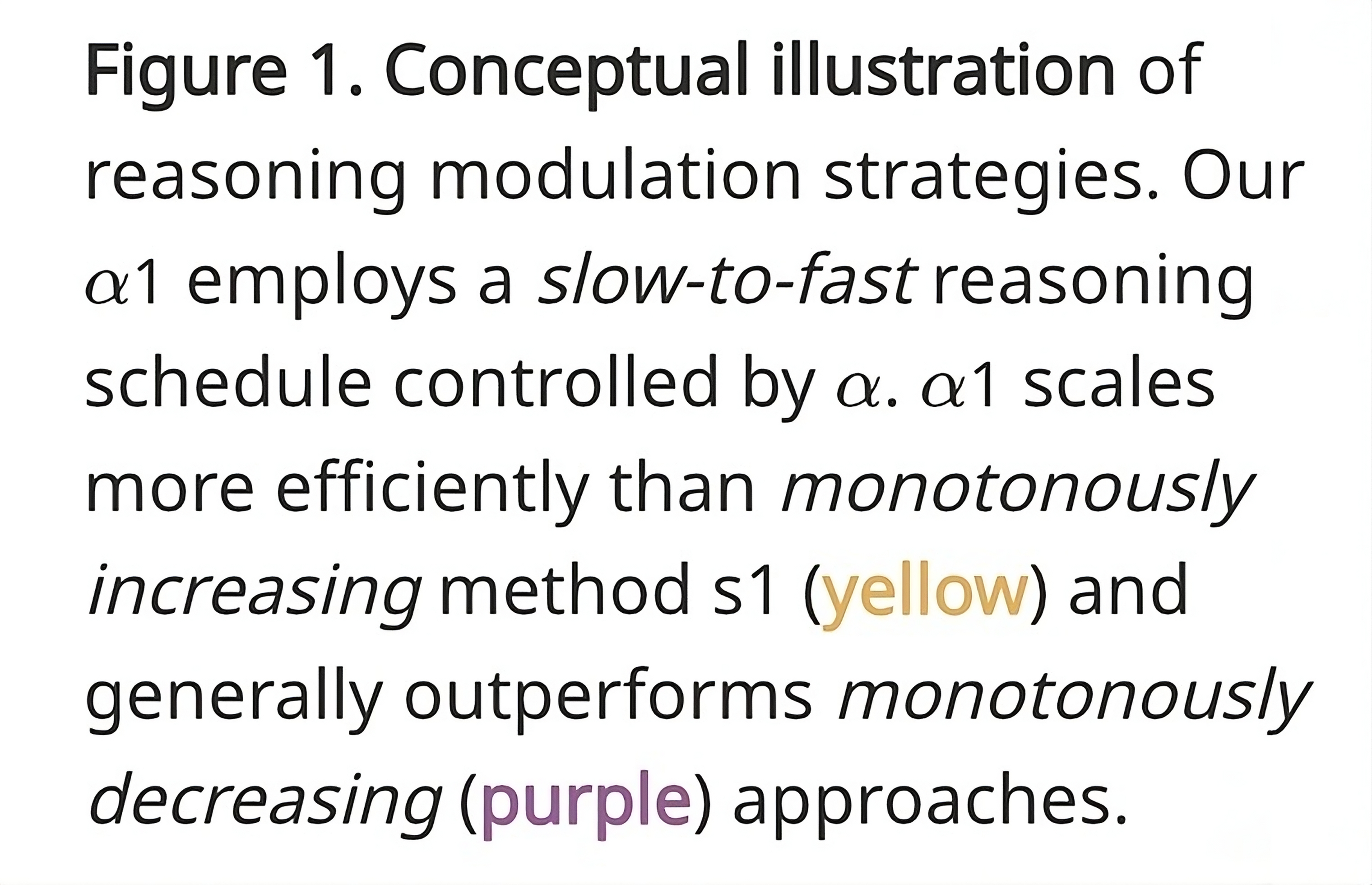
We present AlphaOne ( ), a universal framework for modulating reasoning progress in large reasoning models (LRMs) at test time.
first introduces
), a universal framework for modulating reasoning progress in large reasoning models (LRMs) at test time.
first introduces  moment, which represents the scaled thinking phase with a universal parameter . Within this scaled pre- moment phase, it dynamically schedules slow thinking transitions by modeling the insertion of reasoning transition tokens as a Bernoulli stochastic process.
After the moment, deterministically terminates slow thinking with the end-of-thinking token, thereby fostering fast reasoning and efficient answer generation.
moment, which represents the scaled thinking phase with a universal parameter . Within this scaled pre- moment phase, it dynamically schedules slow thinking transitions by modeling the insertion of reasoning transition tokens as a Bernoulli stochastic process.
After the moment, deterministically terminates slow thinking with the end-of-thinking token, thereby fostering fast reasoning and efficient answer generation.
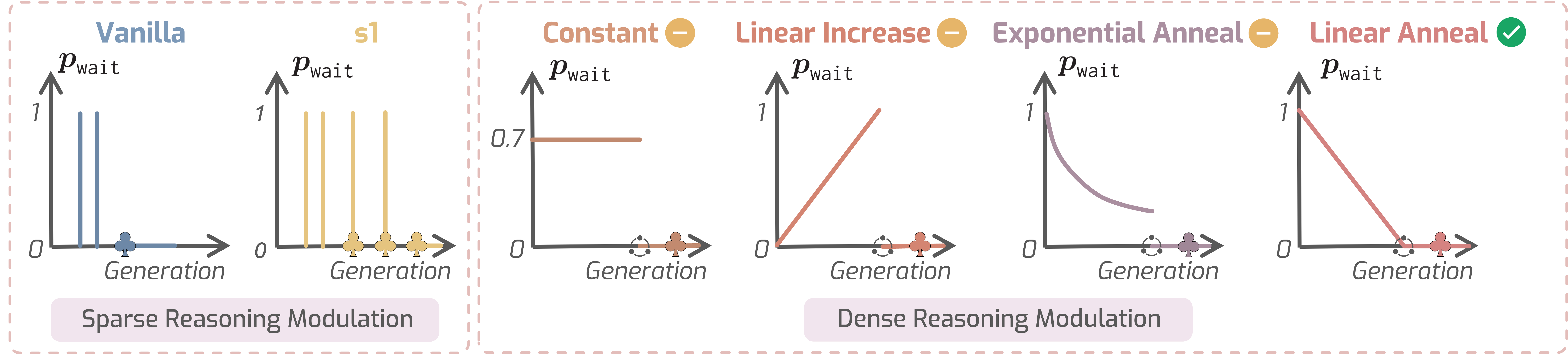
This approach unifies and generalizes existing monotonic scaling methods by enabling flexible and dense slow-to-fast reasoning modulation, while offering critical insights into the joint optimization of reasoning capabilities and computational efficiency.
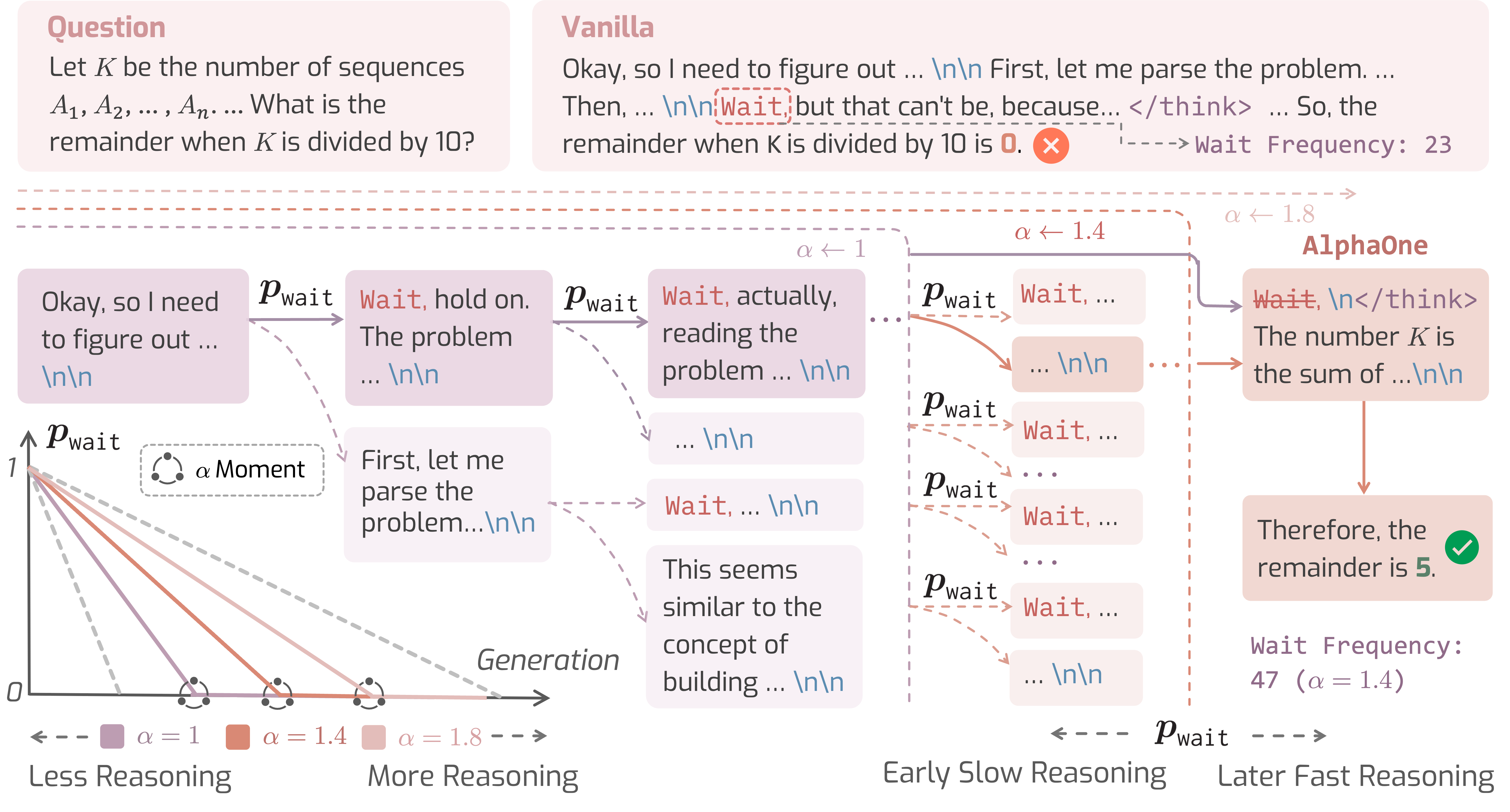 ). Here
  represents moment.
applies dense reasoning modulation via a user-defined slow thinking scheduling in pre- moment.
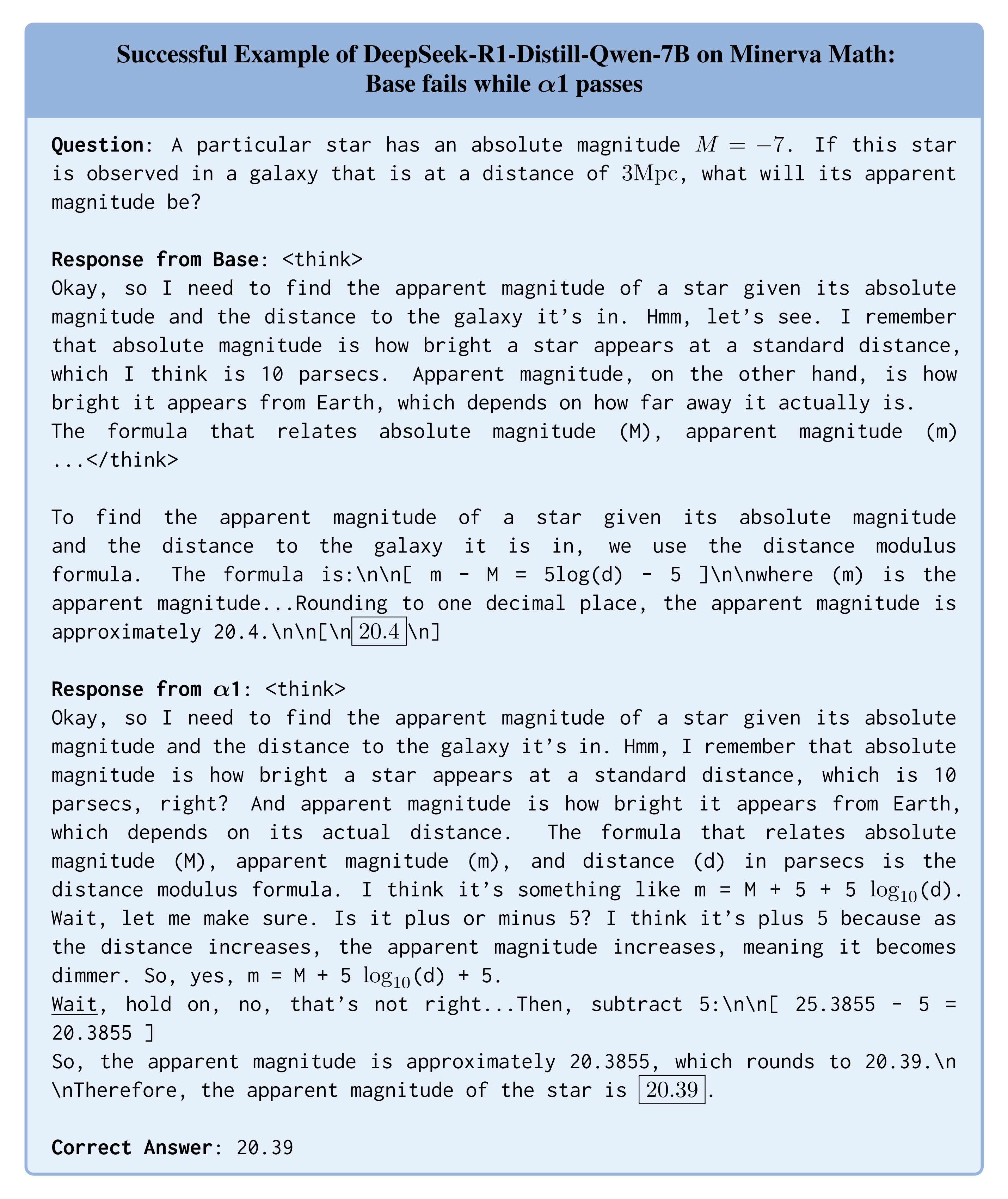
In addition, utilizes a post- moment modulation by replacing slow thinking transitioning tokens "wait" to "</think>", which fosters fast thinking.
Specifically, determines when the slow-to-fast reasoning transition occurs. For example, reducing from 1.4 to 1.0 shifts the moment earlier, resulting in shorter slow reasoning phase and accelerating the annealing of  .
.
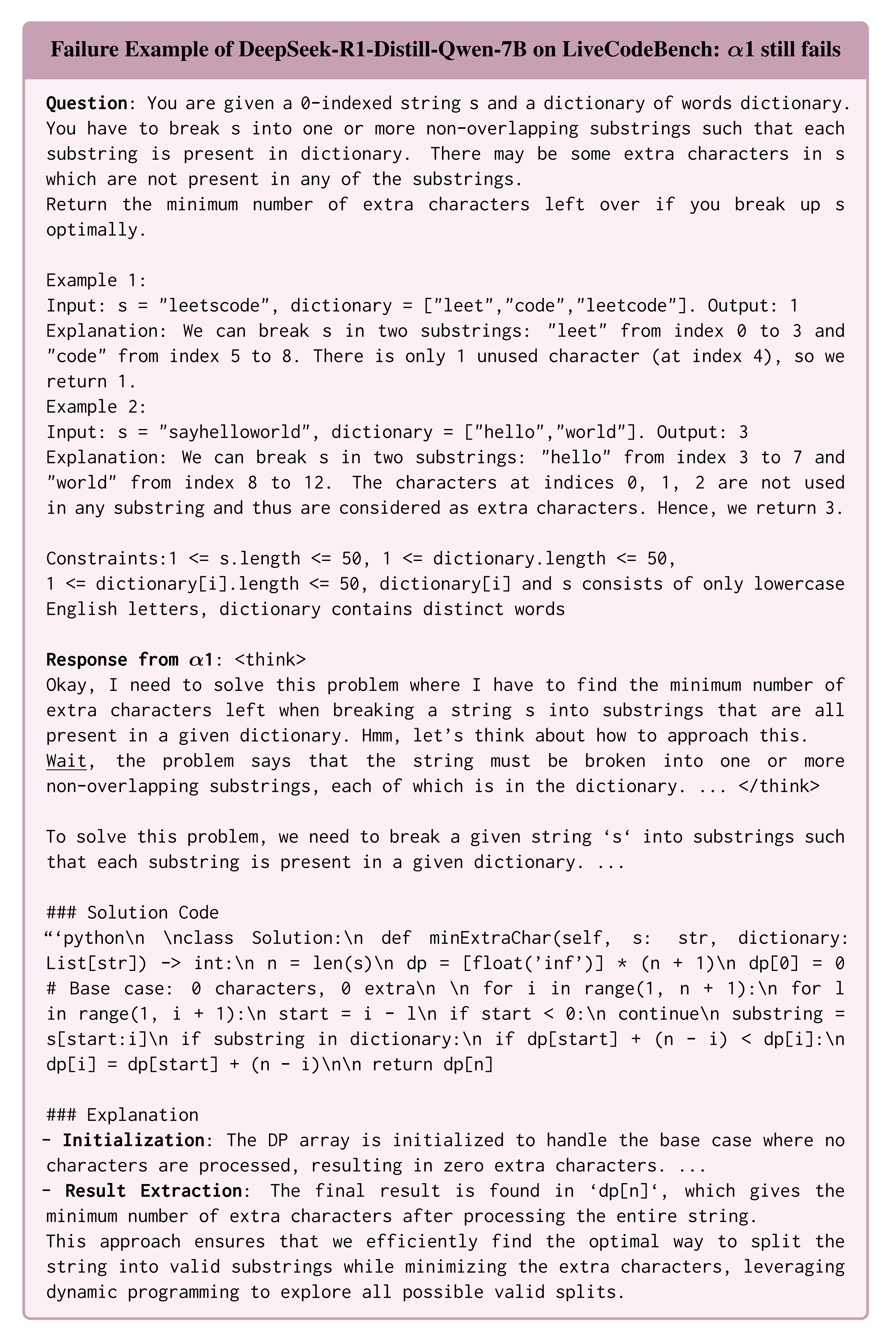
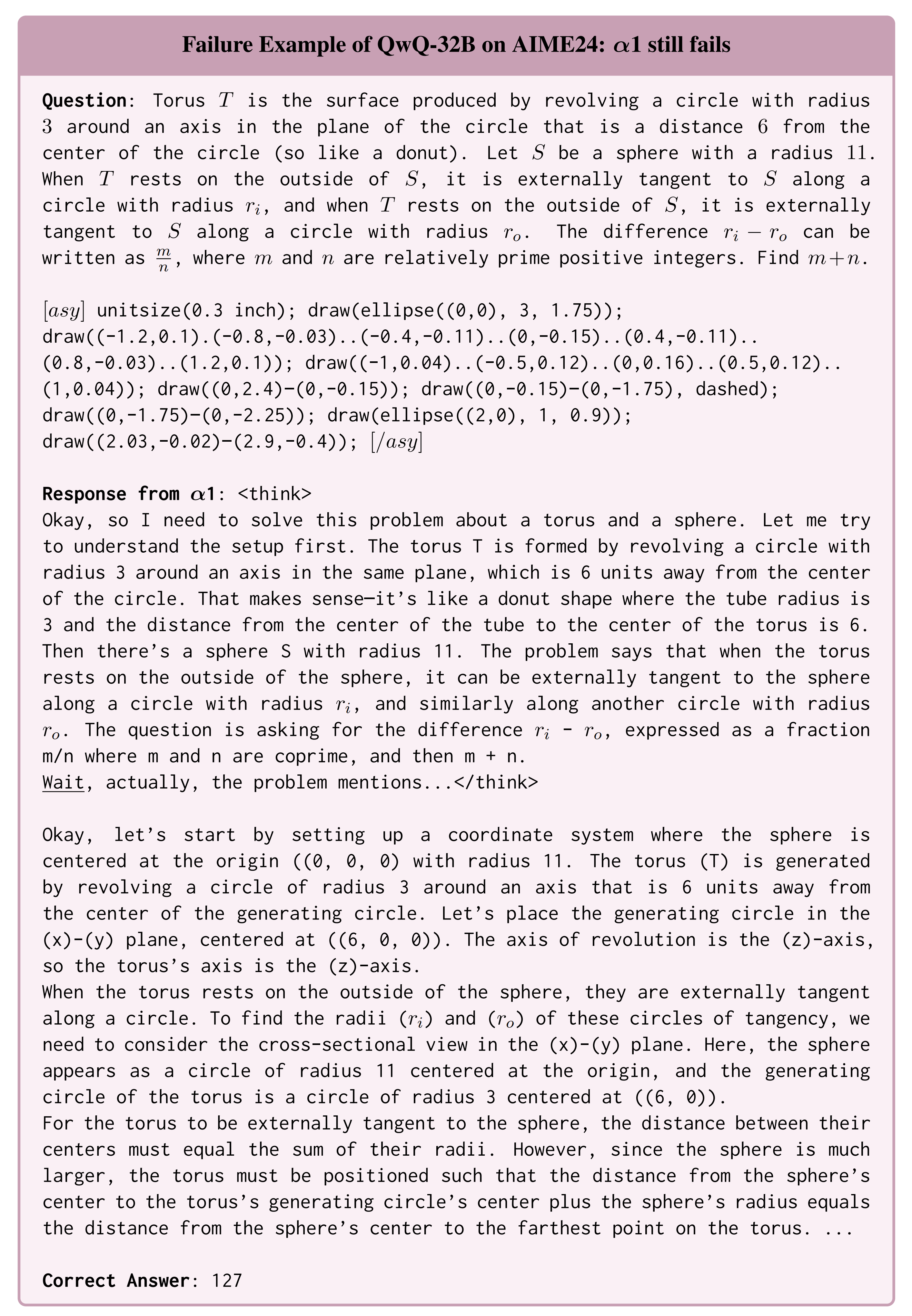
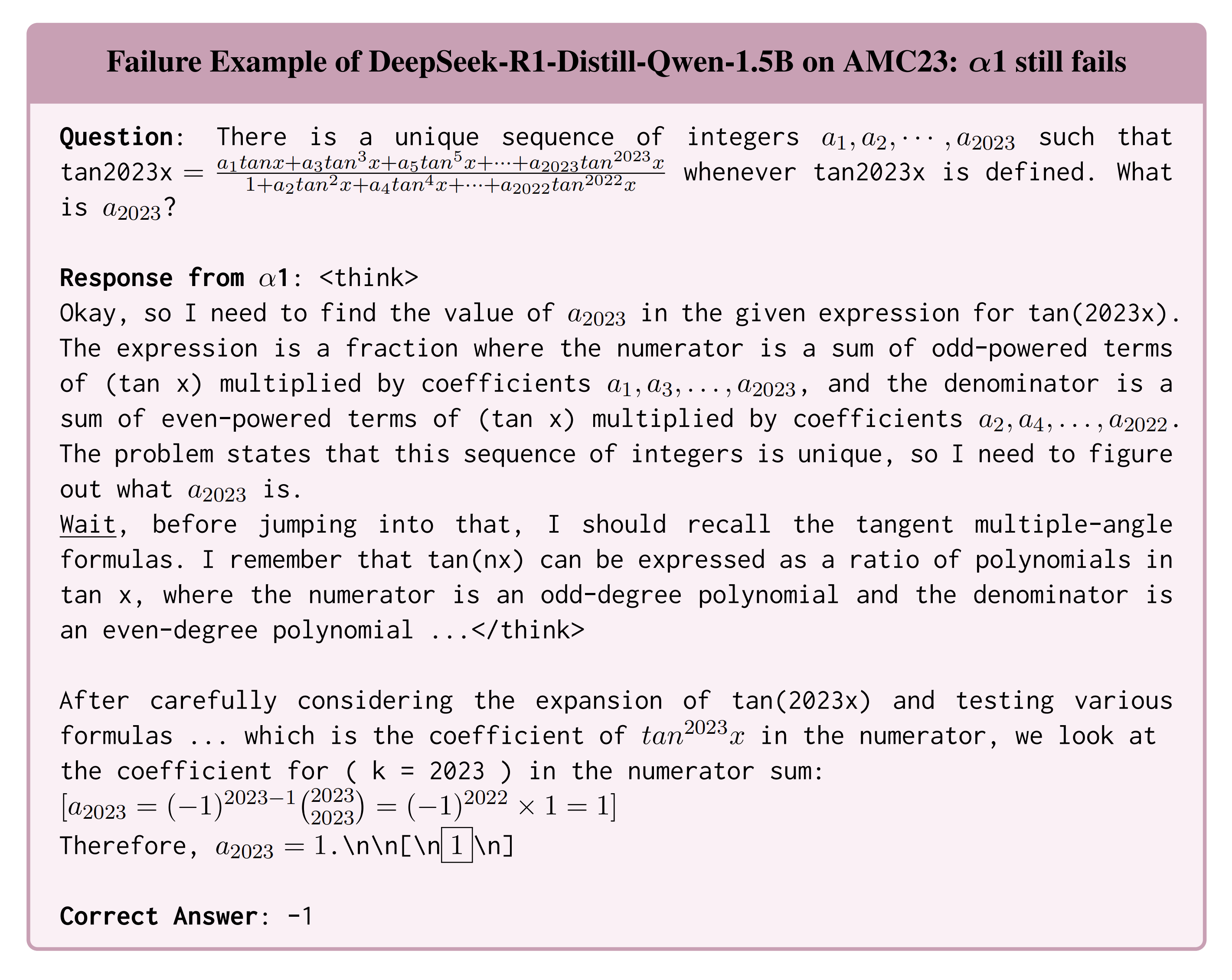
We present some insightful findings from evaluating three different LRMs, ranging from 1.5B to 32B across six reasoning benchmarks, including math, code generation, and scientific problem reasoning.
💡 Slow thinking first, then fast thinking, leads to better LRM reasoning.
💡 Slow thinking can bring efficient test-time scaling.
💡 Slow thinking transitioning in high frequency is helpful.
 represents moment.


The authors sincerely thank the reviewers for their valuable feedback and insightful suggestions. The reviewers' constructive comments will significantly contribute to improving the quality of this work.